Near Point-of-Care (NPOC) testing, an investment that is revolutionizing access to care
Every year, millions of people with tuberculosis (TB) remain undiagnosed or receive a diagnosis too late, with everything that this implies: delaying treatment and allowing the disease to continue spreading. One of the biggest barriers is that many rapid molecular diagnostic tests are still concentrated in centralized laboratories, often far from the communities that need them. More than 2.5 million people go undiagnosed annually and that limited access to testing at primary healthcare level remains a key challenge to reach them.
That is why Near Point-of-Care (NPOC) testing represents such an important step forward for global TB care and prevention. These compact molecular diagnostic technologies can be deployed closer to where people seek care, including primary healthcare facilities, community health centers and decentralized settings. By reducing the distance between people and diagnostic services, NPOC testing can shorten the time to diagnosis, support same-day treatment initiation, and reduce the number of people lost along the care pathway.
How can NPOC tests and other innovations be available and accessible for everyone who needs it?
Unfortunately, across many countries, TB programs are operating in increasingly complex environments. Health systems must simultaneously respond to emerging health threats, workforce shortages, funding constraints and growing demands for integrated services.

Indonesian kid laughing in the greenery.
National TB programs and health organizations are resiliently adapting to a changing global health landscape. The Global Fund investments are playing a critical role in making this possible. Through dedicated initiatives and Grant Cycle 8 investments, for example, the Global Fund is supporting countries to introduce and expand NPOC diagnostics, particularly in decentralized and underserved settings. These investments are helping generate evidence, strengthen implementation capacity, and lay the foundation for larger-scale adoption in the years to come.
At KNCV TB Plus, we are also playing our part: we are collaborating with national TB programs, communities, and global partners to help countries prepare for the introduction and scale-up of NPOC technologies. Through technical assistance, implementation support, readiness assessments, training, and community engagement, KNCV is helping ensure that countries can incorporate these innovations into integrated routine services in a sustainable and country-led way.
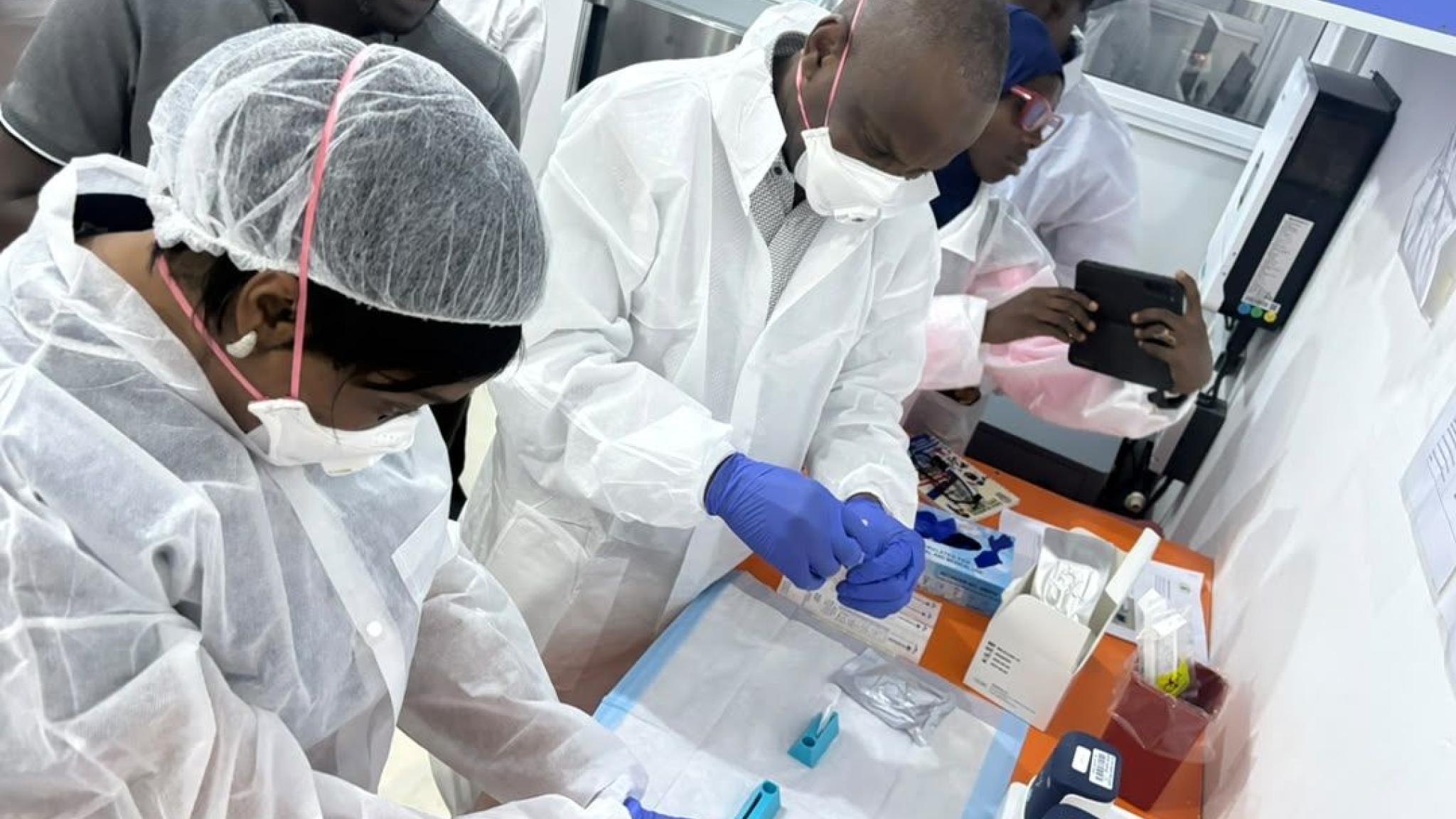
Recently, Dr. Gidado Mustapha, executive director of KNCV Tuberculosis Foundation, participated in a hands-on training on using the NPOC technologies in Zankli Medical Center in Karu, Nigeria.
There is a big difference between understanding an innovation on paper and seeing it work at the point of care where it can potentially make diagnosis faster, bring services closer to patients, and improve access to quality care.


The potential impact of NPOC extends beyond faster diagnosis. Emerging evidence suggests that NPOC technologies could expand testing coverage while reducing overall diagnostic costs, creating opportunities for countries to reach more people with the same resources. For health systems facing growing financial pressures, innovations that improve both access and efficiency are more important than ever.
Turning global investments into country impact
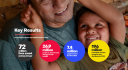
The latest Global Fund Results Report 2026 demonstrates that investments in health save lives, strengthen health systems, and contribute to global health security. Despite growing financial pressures and increasing challenges facing health systems worldwide, the report highlights continued progress in the fight against TB, HIV, and malaria, driven by the adaptability and resilience of countries. The Global Fund reports that since its creation, the partnership has helped save 72 million lives and reduce the combined death rate from the three diseases by 65%, illustrating the lasting impact of sustained international cooperation.
In 2025, funding cuts and multiple overlapping crises placed new pressure on TB programs, threatening progress made in recent years.
Countries faced disruptions across prevention, diagnosis and treatment services, straining national TB programs. Yet despite these challenges, countries and partners demonstrated resilience. The Global Fund partnership worked with countries to protect essential TB services, prioritize lifesaving interventions and adopt more efficient approaches to care, helping safeguard progress against the world’s deadliest infectious disease.
The report serves as a reminder that progress is possible when countries are empowered to lead, but also that continued investment is needed to accelerate progress toward ending TB as a public health threat.
As the Global Fund Results Report 2026 highlights a renewed focus on innovation and country-led solutions, NPOC testing provides a powerful example of how investments can translate into real-world impact.

Laboratory facility in Khunti District Health Center. Sept 2026
As a long-standing technical partner to national TB programs, KNCV works alongside governments, communities, civil society organizations, and international partners to ensure that these investments translate into tangible improvements in people's lives.
KNCV provides technical assistance to support strategic planning, program implementation, resource optimization, and the scale-up of evidence-based interventions that strengthen TB responses. Our work focuses on ensuring that countries remain at the center of decision-making and that communities play a meaningful role in shaping policies, priorities, and service delivery.
Through initiatives such as ACT4TB and KNCV-ACTS, KNCV supports countries to:
- Strengthen country-led strategic planning and implementation;
- Improve the quality and impact of Global Fund funding requests and grants;
- Scale up high-impact WHO recommended interventions and innovations;
- Enhance community engagement and accountability mechanisms; and
- Build stronger, more resilient health systems capable of responding to current and future health threats.
Country leadership remains at the centre
In the current global health financial environment, countries are increasingly leading the design, prioritization and implementation of interventions that respond to their realities. Rather than applying a one-size-fits-all model, programs are adapting strategies to meet the needs of diverse populations and the changing epidemiological contexts.
Countries have worked hard to protect access to essential TB diagnosis and treatment amid severe funding pressures. The scale-up of AI-enabled digital X-rays for TB detection, such as the Delft Imaging CAD4TB, is an example of countries adopting innovative TB diagnostic tools. These kind of innovations have remained at the heart of the response to a challenging environment and helped reached this impact in 2025: 7.4 million people treated for TB in Global Fund-supported countries, including 115,000 people with drug-resistant TB.
©Global Fund Results Report 2026
These numbers are not reached in isolation, they are reached with sustained collaboration and continued investment. Much more is needed to come closer to reach the global targets on the fight against TB, HIV and malaria. KNCV remains committed to supporting countries to maximize the impact of investments like the Global Fund’s through technical assistance, knowledge sharing, and the scale-up of proven interventions. Together with national programmes, communities, donors, and partners, we will continue working toward a future where everyone has access to quality services in prevention, diagnosis, treatment, and care.