TEST4TPT
Accelerating person-centred TB prevention through innovative skin testing and community delivery.
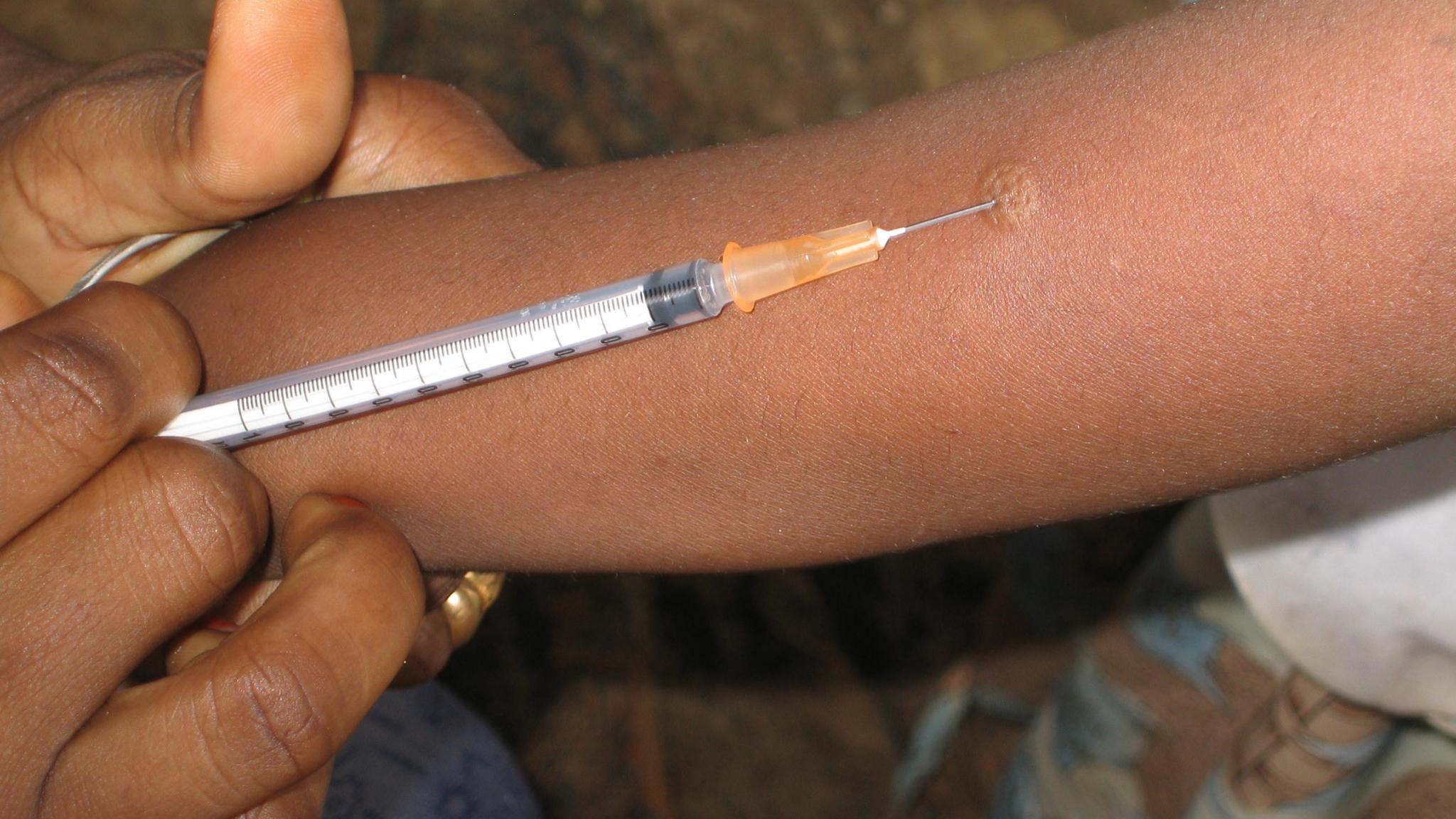
Despite significant global progress in tuberculosis (TB) prevention, millions of people at risk of developing TB are still not receiving preventive treatment. A major barrier is the limited availability of reliable, affordable, and accessible tests that can identify TB infection and support timely initiation of preventive therapy. Conventional testing approaches often require multiple visits to health facilities, creating challenges for individuals living in high-burden settings and increasing the risk of loss to follow-up.
Recent advances in TB infection testing offer new opportunities. SIILTIBCY is a WHO-recommended skin test that provides improved specificity compared with the traditional tuberculin skin test and can be delivered at low cost. TEST4TPT builds on this innovation by evaluating whether digital tools and community-based delivery models can make TB prevention services more accessible, efficient, and person-centred.
About TEST4TPT
TEST4TPT is a multi-country research project that aims to improve access to TB preventive treatment (TPT) among people who have been exposed to TB. The project evaluates an innovative, person-centred approach that combines the WHO-endorsed SIILTIBCY skin test, community-based service delivery, and AI-assisted reading technology to help more people start and complete TPT. The project is being implemented in Mozambique, Tanzania, and Uganda through a consortium of African and European research and implementation partners.
TEST4TPT is coordinated by KNCV Tuberculosis Foundation and funded through the Global Health EDCTP3 programme, co-funded by the European Union.
Aim
The overall goal of TEST4TPT is to evaluate an integrated, community-based approach to TB infection testing using SIILTIBCY, community health worker support, and AI-assisted result reading, with the aim of improving initiation and completion of TPT among close contacts of people newly diagnosed with pulmonary TB.
The project investigates whether bringing testing and follow-up closer to communities can reduce barriers to care and improve TB prevention outcomes. It combines implementation research with technological innovation and will generate evidence on effectiveness, feasibility, acceptability, cost-effectiveness, and health impact.
TEST4TPT will be implemented across primary healthcare facilities in Mozambique, Tanzania, and Uganda and will work closely with National TB Programmes, health workers, community health workers, and affected communities.
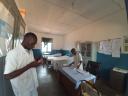
Healthcare workers in facility in Mozambique
Planned Activities
TEST4TPT consists of seven interconnected work packages and four major research components designed to generate evidence for future scale-up of person-centred TB prevention services.
- Validation of AI-assisted TB infection testing
The project will assess the reliability and diagnostic accuracy of an innovative SmartPatch and TBConnect application that support AI-assisted reading of SIILTIBCY skin test results. This approach aims to improve standardisation and reduce variability in test interpretation.
- Pragmatic cluster-randomised trial
TEST4TPT will compare facility-based and home-based approaches for TB infection testing and preventive treatment delivery. The study will evaluate whether community-based testing pathways increase initiation and completion of TPT among household contacts of people with TB.
- Feasibility and acceptability research
Through a mixed-methods implementation study, the project will explore how acceptable, feasible, and useful the intervention is for communities, healthcare workers, policymakers, and programme managers.
- Economic and impact evaluation
Researchers will assess the cost-effectiveness of the testing strategies and model their potential impact on TB transmission, TB incidence, and disability-adjusted life years (DALYs) averted.
- Dissemination and policy translation
The project includes a strong focus on communication, knowledge sharing, and policy engagement to ensure that findings can inform national TB programmes and future global guidance.
Partners
TEST4TPT is coordinated by KNCV and implemented through a consortium of leading research and implementation organisations from Africa and Europe.
Consortium partners
- KNCV Tuberculosis Foundation (Netherlands)
- Makerere University Lung Institute (MLI), Uganda
- Barcelona Institute for Global Health (ISGlobal), Spain
- London School of Hygiene & Tropical Medicine (LSHTM), United Kingdom
- National Institute for Medical Research (NIMR), Tanzania
- MKUTA (Mwitikio wa Kudhibiti Kifua Kikuu na UKIMWI Tanzania), Tanzania
- Fundação Manhiça (FM), Mozambique
- Mildmay Research Centre Uganda (MRCU), Uganda
The consortium combines expertise in epidemiology, implementation science, digital health, community engagement, health economics, clinical research, and policy translation.
Expected impact
TEST4TPT will generate evidence for a new model of TB prevention that is more accessible, people-centred, and scalable in high-burden settings. The project is expected to:
- Increase the number of eligible contacts who start and complete TPT.
- Improve access to affordable and reliable TB infection testing through innovative digital and community-based approaches.
- Provide evidence on the effectiveness, feasibility, acceptability, and cost-effectiveness of decentralised TB prevention models.
- Support National TB Programmes with practical implementation guidance and policy-relevant evidence.
- Reduce unnecessary preventive treatment by improving identification of people with evidence of TB infection.
- Strengthen community health systems through greater involvement of community health workers and digital health innovations.
Ultimately, TEST4TPT will contribute to global efforts to end TB by demonstrating how innovative diagnostic technologies and community-based care can make TB prevention more equitable, efficient, and effective.
Funding
TEST4TPT receives financial support from the Global Health EDCTP3 Joint Undertaking, co-funded by the European Union under Grant Agreement No. 101249120.