Surviving a stigmatized disease: initiatives connecting art and science calling for attention to the world’s deadliest infectious disease
February 16 – the Hague, Netherlands.
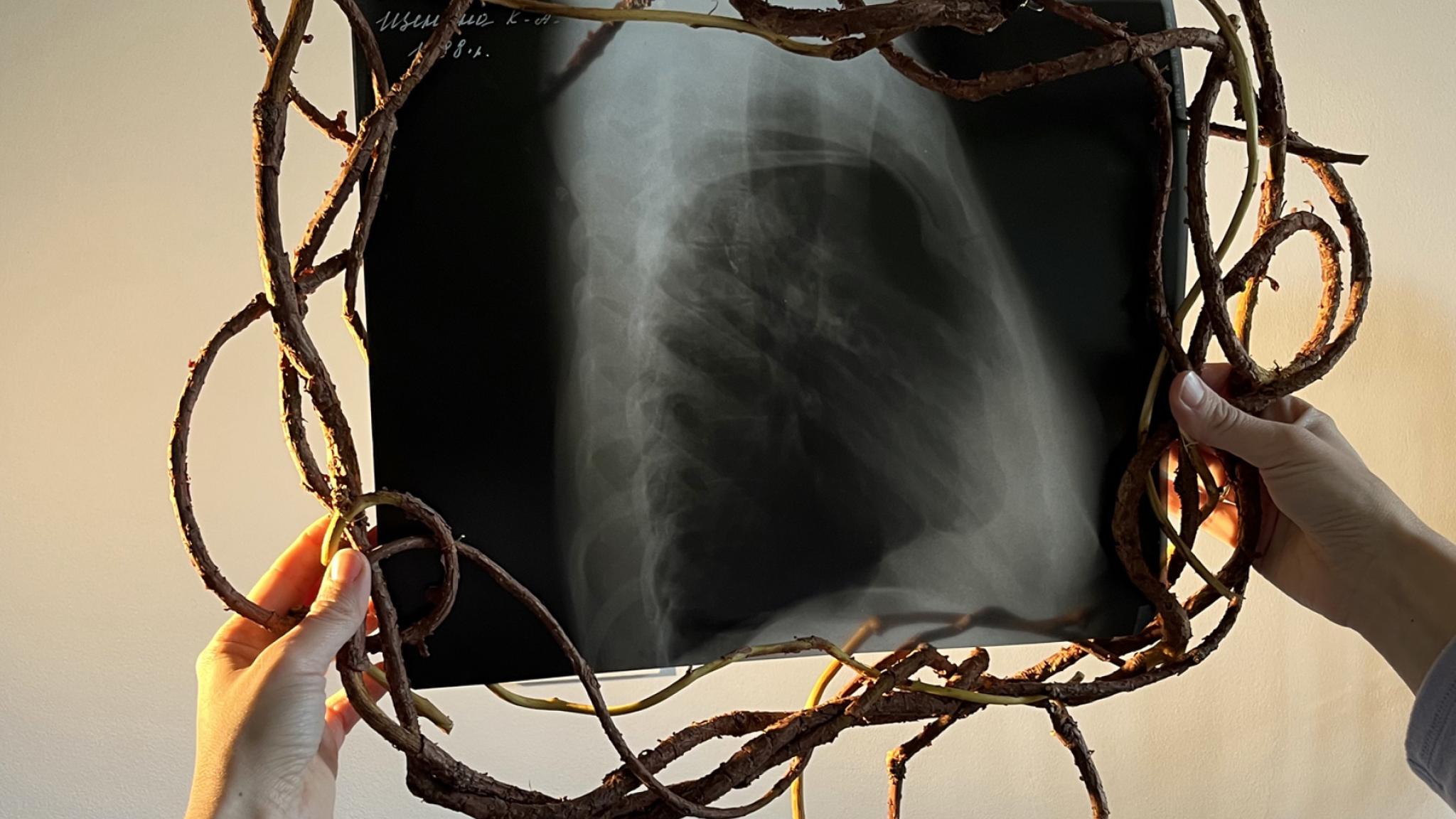
Despite being fully curable, tuberculosis (TB) remains the world’s deadliest infectious disease, claiming nearly 4,000 lives every day. According to the latest data, in the Netherlands at least 2 people are diagnosed with TB daily. Across different regions, TB may be associated with poverty, imprisonment, drug use, homelessness, or even a perceived loss of social value, particularly for women and girls. Meanwhile, in much of the western countries, TB is incorrectly perceived as “a disease of the past.” This misconception leaves nearly four million people unreported and untreated each year, even in high-income countries.
While there is a global pledge to end TB by 2030, progress is lagging: scientific breakthroughs remain stuck in bottlenecks, funding remains insufficient, and a powerful and often invisible force continues to block access to care… stigma.
“TB is never an individual burden alone. Around the world, this disease disrupts families, fractures livelihoods, and places immense pressure on already vulnerable communities.” says Gidado Mustapha, Executive Director of KNCV Tuberculosis Foundation. When people are forced into isolation or hide their diagnosis due to stigma, it impacts their journey to cure. In addition, children may lose caregivers, households lose income, and entire communities face cycles of economic and social hardship. Gidado stresses that “in many settings, TB reinforces existing inequalities, and affects disproportionally people living in poverty, migrants, people in prisons, and those with limited access to healthcare or social protection. For KNCV, stigma is not a side issue, but a central determinant of health outcomes.”
As KNCV emphasizes in its 2026–2030 Strategic Plan, ending TB requires more than medical solutions, it demands a holistic, people- and community centred approach that strengthens health systems, protects livelihoods, and addresses the social determinants shaping who gets sick, who gets care, and who gets left behind.
“Tuberculosis is often spoken about in numbers, but rarely in human terms. As a TB survivor, I know how deeply the disease can isolate physically, socially, and emotionally.”
This is why community building, survivor networks, and accessible, people-centred healthcare pathways are essential components of effective TB prevention and care. These approaches recognize that healing requires antibiotics, but also dignity, belonging, and long-term support. In the lead up to World TB Day 2026 (24 March), KNCV is partnering with Paulina Siniatkina and health organizations to bring to light the realities of surviving a stigmatized disease. By participating in this series of events connecting art and science, KNCV is calling for attention to the world’s deadliest infectious disease.
Hospitality at Bradwolff Projects
From Sunday 22 February to Tuesday 24 March, Paulina Siniatkina will host her new exhibition Hospitality at Bradwolff Projects located in a former surgical building of the historic Burgerziekenhuis in Amsterdam East. Siniatkina spent seven months in isolation during her TB treatment. In Hospitality, she translates those experiences into a spatial and material installation that challenges viewers to reconsider the human experience behind diagnosis. Initiatives like Hospitality are born from the necessity to create spaces where people affected by TB can be seen, heard, and supported, while fostering resilience and collective wellbeing.
Photography courtesy of The Union Conference 2025.
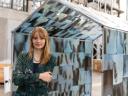
Paulina Siniatkina. Photography by The Union Conference 2025
Symposium on science, stigma, society, and community leadership in the TB response
On Friday 20 March, a community-organized Symposium on science, stigma, society, and community leadership in the TB response will take place at KIT Institute in Amsterdam. The symposium is open to researchers, clinicians, civil society and students and will feature a number of dynamic and interactive sessions to stimulate discussion and reflection on the TB response and community leadership and innovations transforming the field. The symposium will include sessions led by community members, advocates, scientists and leaders in the field of TB care and prevention. Speakers include:
- Paulina Siniatkina, artist, TB survivor and advocate (Rusia)
- Aman Shukla, youth mobilization advocate (India)
- Frouke Procee, TB survivor and physician (Netherlands)
- Adebola Adams, TB survivor and advocate (Nigeria)
- Jackie Cuen, TB survivor and advocate (US)
- Lucica Ditiu, Executive Director Stop TB Partnership (Geneva)
- Gidado Mustapha, Executive Director KNCV Tuberculosis Foundation (Netherlands)
- Robyn Waite, cross-sector collaboration advocate (Canada)
- Timur Abdullaev, community mobilization advocate (Uzbekistan)
- Shaun Palmer, community-led vaccine advocate (Netherlands)
Art by Paulina Siniatkina. Photography courtesy of Paulina Siniatkina.
Magic Mountain film screening
On Saturday 21 March, the film Magic Mountain by Georgian filmmaker and TB survivor Mariam Chachia will be screened at De Balie in Amsterdam, followed by a public discussion on the societal impacts of TB, stigma and the way forward. In this film, Mariam spotlights the Abastumani TB Hospital in the southwest of Georgia, a building from the late nineteenth century, while exploring the interconnections of this place with the historic past of the region. The Abastumani TB Hospital was once used as an isolation center for people with drug-resistant TB.
Photography by Paulina Siniatkina. Disclaimer: size adjusted to fit this page.
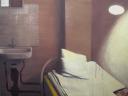
Art by Paulina Siniatkina. Photography courtesy of Paulina Siniatkina.
Special Meeting Day at Rijksmuseum
On Monday 23 March, the Special Meeting Day will take place at Rijksmuseum to bring together TB survivors in the Netherlands, share experiences, enjoy a range of art-based activities building on community resilience, and explore the museum at their own pace. This event is open to every person that has been treated for TB in the Netherlands, who are also invited to participate in talks and take part in activities like: TB PhotoVoices, Non-Violent Kitchen Table or a writing workshop. The Special Meeting Days (Speciale Ontmoetingsdagen in Dutch) are organized by 23 collaborating health organizations (Samenwerkende Gezondheidsfondsen) and made possible by the VriendenLoterij.
Photography courtesy of Rijksmuseum, by John Lewis Marshall.
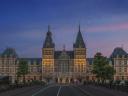
Courtesy of Rijksmuseum. Photography by John Lewis Marshall.
A call to building stigma-free communities as a Global Health priority
Antimicrobial resistance, war, conflict, climate shocks and pandemics continue to reshape health systems where TB remains a key indicator of where health equity succeeds or fails.
Siniatkina acknowledges that without strong community structures, stigma-free environments, and integrated health and social support systems, many survivors continue to carry the burden in silence. “I believe that for society to make progress toward ending TB, it must be willing to reflect on its inconvenient truths. We need to invest in fairer health care systems, equitable access to diagnostics and treatment, and greater care for the people behind the diagnosis. Art can make these conversations accessible and acceptable, helping to break the cycle that holds society back and contributing to a breakthrough in the same way it helped me overcome my own trauma” she expresses.
KNCV envisions a world free from TB and related health challenges, and continues to work and advocate for smarter investments, more adaptive health systems, and stronger integration of social support into disease prevention and care. This reflects a growing understanding in global health: resilient health systems are not built by biomedical solutions alone.
Relevant information:
- KNCV Tuberculosis Foundation: KNCV has been fighting TB since its establishment in 1903 as a collaborative effort by several private local TB control initiatives in the Netherlands. Over the past 120 years, the organization has acquired indispensable knowledge and experience in the field of effective TB prevention and care, resulting in pre-elimination in the Netherlands and significant contributions to global evidence generation, policy development and TB program implementation worldwide.www.kncvtbplus.com
- Paulina Siniatkina: Paulina Siniatkina is an artist and activist who works with a form of autobiographical reflective research. Her socially-oriented practice is driven by her own survival of tuberculosis (TB) in 2015 and is dedicated to fighting stigma and rethinking what is considered conventional. Her works are in the collections Stop TB Partnership (Geneva), the Bill & Melinda Gates Medical Research Institute (Boston), Oxford Immunotec (London), FIND (Geneva), The Moscow Times (Amsterdam), MaxArt Foundation (Moscow) and private collections. Paulina holds the role of KNCV’s TB Ambassador since 2024. www.paulinasiniatkina.com
Press and Contact information:
Lilian Polderman
E-mail: lilian.polderman@kncvtbc.org
Telephone number: +31 70 416 7222 (Mon – Fri, 9 am – 2 pm)