Strengthening country-led TB planning in Zambia through impact analysis and partnership
KNCV supported Zambia’s National TB Program in Lusaka through an impact analysis using the Integrated Health Tool (IHT). The IHT helps to identify cost-efficient, high-impact tuberculosis (TB) interventions that can be used to develop their upcoming National Strategic Plan. This country led modelling work reflects KNCV’s efforts to strengthening person-centred, country-led TB programming to improve outcomes for people affected by TB.
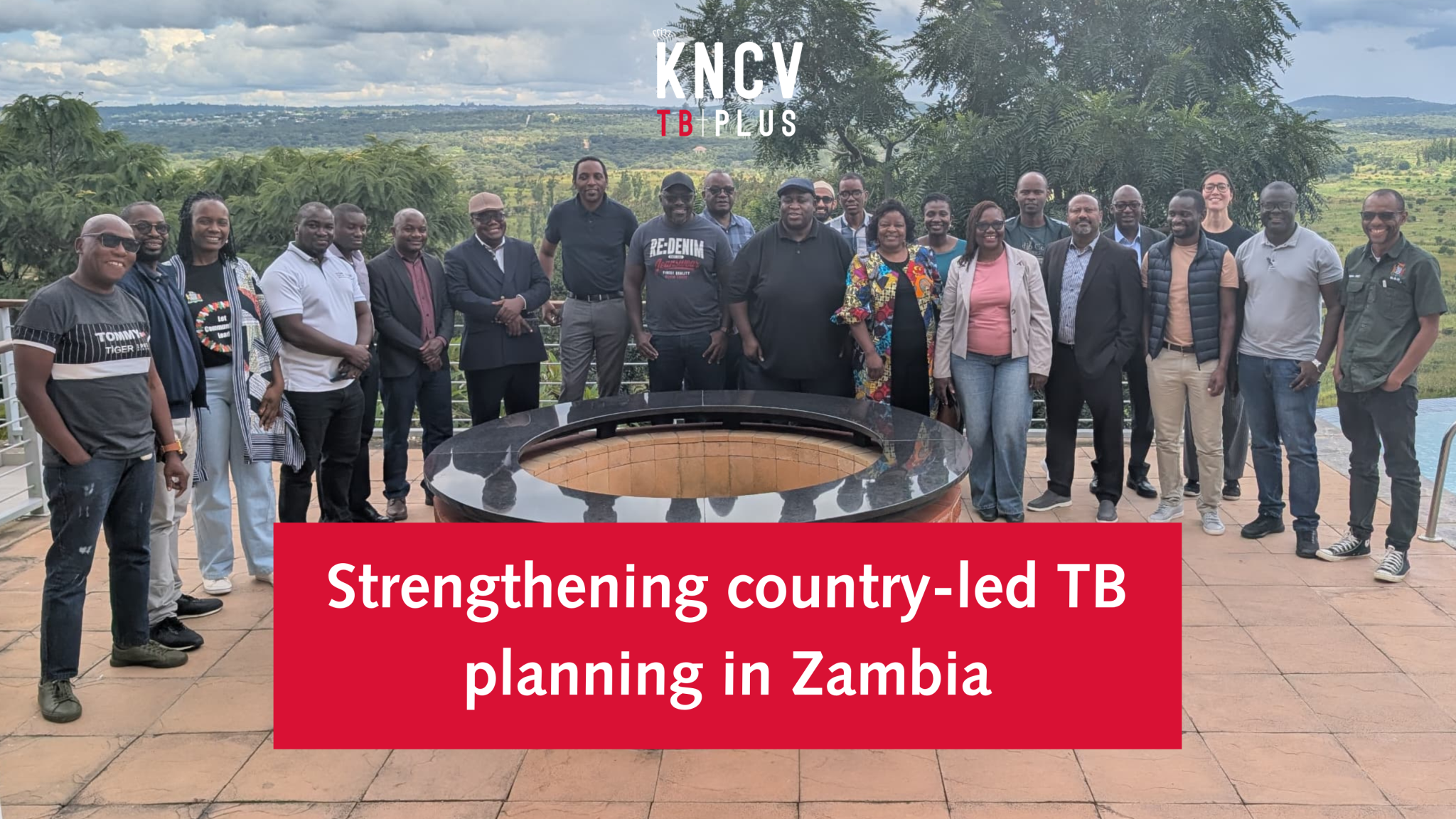
Last week, KNCV experts, Demelash Assefa and Joeri Buis spent a week in Lusaka, Zambia, working closely with the National TB Program (NTP) and key interest-holders to conduct an impact analysis of tuberculosis (TB) interventions. This collaborative modelling exercise focused on understanding which interventions can deliver the greatest health impact in the most cost-efficient way, supporting Zambia’s efforts to respond to a persistent TB burden shaped by financial constraints, social determinants, and ongoing transmission in vulnerable communities. The analysis forms part of a broader, country led process to strengthen strategic planning and ensure that TB responses are tailored to local realities and priorities.
Zambia continues to face a complex TB epidemiological context, where access to timely diagnosis, continuity of care, and patient-centred service delivery remain critical challenges. Strengthening the national response requires scaling effective interventions and making informed choices about where investments will have the greatest impact for people affected by TB. By collaborating together with Zambia’s NTP program experts, KNCV technical experts and national implementers, the modelling exercise created space for dialogue around realistic scenarios, trade-offs, and opportunities to accelerate progress toward national EndTB goals.
Using the Integrated Health Tool (IHT) to support Zambia health strategies
At the center of this work is the Integrated Health Tool (IHT), a web based planning, costing, and impact analysis tool developed to support national health strategies. The IHT, formerly known as the OneHealth Tool, includes a dedicated TB module that combines costing with epidemiological impact modelling, allowing countries to explore how different intervention packages affect health outcomes and resource needs. By linking coverage targets with projected impact, the IHT helps planners prioritize country-specific interventions with the highest impact on the TB burden. This ensures that services are focusing on the populations where it matters most.
The outcomes of this collaborative activity will directly inform the development of Zambia’s upcoming National Strategic Plan (NSP) for TB. This process supports a shift from generic solutions toward targeted, high impact strategies that reflect Zambia’s epidemiological and health system context.

This work in Zambia is closely aligned with KNCV Programmatic Areas, which prioritize country led action, knowledge exchange, implementation science, and health and community systems strengthening. KNCV’s strategy emphasizes the use of robust evidence, modelling, and learning to support national programs in making informed decisions, while embedding people-centred and rights based approaches across TB programming. Through partnerships with NTPs and local interest-holders, KNCV continues to support sustainable, high impact TB responses that are rooted in local leadership and designed to deliver sustainable results for people affected by TB.