New KNCV Information Note supports countries to include Stigma Reduction in Global Fund Grant Cycle 8 applications
Addressing stigma, discrimination, and unequal access to care is essential to ending tuberculosis (TB). To help countries strengthen their Global Fund Grant Cycle 8 (GC8) applications, KNCV Tuberculosis Foundation has developed a new information note that provides practical guidance on integrating stigma reduction interventions into GC8 proposals. The note aims to ensure that stigma reduction and community systems strengthening approaches are aligned with Global Fund priorities, adequately reflected in applications, and effectively addressed throughout the grant implementation period. Based on the newly developed GC8 Stigma Information Note by KNCV TB Plus, the guidance highlights how stigma reduction strategies can be embedded across multiple GC8 modules and investment areas.
The Global Fund is one of the most successful global health partnerships of our time. Since 2002, Global Fund-supported programmes have saved an estimated 70 million lives and helped reduce the combined death rate from HIV, TB and malaria by 63% in the countries where it invests. In 2024 alone, Global Fund-supported programmes provided HIV treatment to 25.6 million people, treated a record 7.4 million people with TB, and distributed 162 million insecticide-treated mosquito nets to protect families from malaria.
The latest Global Fund report and press releases highlight that these investments are delivering impact far beyond disease control. By strengthening health and community systems, expanding access to innovative technologies such as AI-enabled TB screening and rapid diagnostics, and supporting community-led and rights-based approaches, the Global Fund is supporting low- and middle-income countries build more resilient and equitable health systems. These results demonstrate that sustained investment in health, communities, and the removal of barriers to care remains one of the most effective ways to save lives and improve long-term development outcomes.
The closest application window for the Global Fund Grant Cycle 8 (GC8) ends on July 27. As countries are preparing their applications aligning their efforts to Global Fund priorities, KNCV has developed an information note for the inclusion of stigma reduction activities in the Global Fund proposals during this grant period. The purpose of this information note is to provide country teams with relevant information and guidance to ensure stigma reduction, community, rights and gender approaches are aligned with Global Fund prioritization, adequately included in GC8 grants, and effectively addressed in the grant period.
More about stigma reduction for GC8
TB-related stigma remains one of the most significant barriers to achieving global TB targets. Fear of discrimination, social exclusion, and negative attitudes can discourage people from seeking care, reduce adherence to treatment, and undermine TB treatment outcomes. Additionally, stigma also challenges mental health, social cohesion, and can lead to disruptions in the enjoyment of human rights. In KNCV’s information note, addressing stigma is a social imperative and a strategic investment that can improve case detection, treatment success, prevention efforts, and retention in care, while strengthening the community systems and their role in shaping a healthier society.
The Global Fund has identified the removal of barriers to health services as a key priority for GC8. As countries face increasing pressure to maximize impact with limited resources, investments that strengthen access to care, improve health outcomes, and support vulnerable populations have become even more important. Within this framework, stigma and discrimination reduction are recognized as critical cross-cutting priorities.
Community, Rights and Gender (CRG) approach
The Global Fund’s GC8 approach places strong emphasis on community engagement, human rights, and gender-responsive programming. Communities affected by TB play a key role in identifying barriers to care, informing solutions, and monitoring whether services are accessible, responsive, and equitable. KNCV’s information note therefore encourages countries to integrate stigma assessments, community-led monitoring, and rights-based programming into their TB, HIV, and Resilient and Sustainable Systems for Health (RSSH) investments.
Practical guidance for GC8 applications
KNCV's GC8 Stigma Information Note provides country teams with an overview of the GC8 modules where stigma reduction activities can be prioritized and financed. These include:
- TB and HIV treatment, care and support;
- TB and HIV testing and diagnostic services;
- Collaboration with other providers and sectors;
- Key and vulnerable populations;
- RSSH - Reducing human rights related barriers to HIV and TB services;
- RSSH - Addressing gender discrimination and norms that pose a barrier to HIV and TB services;
- RSSH - Human resources for health and quality care; and
- Indicators
Illustrative activities include conducting stigma assessments, developing targeted action plans, strengthening peer and psychosocial support, building the capacity of healthcare workers to provide non-discriminatory services, and implementing community-led monitoring initiatives.
The guidance also emphasizes the importance of moving beyond measuring stigma alone. While many countries have invested in stigma assessments, evidence from previous Global Fund applications suggests that assessment findings are not always translated into concrete interventions. The new KNCV resource supports countries in linking data and community insights to practical actions that address stigma at individual, community, health facility, and policy levels.

child and mom kyrgyzstan
Proven tools and Technical Assistance to support country teams for GC8
In addition to outlining relevant GC8 investment opportunities, the information note presents a range of KNCV-developed tools and approaches that countries can consider incorporating into their funding requests. It also includes guidance on budgeting for KNCV technical assistance to support the design and implementation of stigma reduction programming. Examples highlighted in the note include person-centred approaches, community engagement methodologies, psychosocial support interventions, digital innovations, and other evidence-informed tools designed to reduce stigma and discrimination while improving health outcomes.
Expected results for stigma investments in GC8
As Global Fund GC8 prioritizes impact, equity, and value for money, stigma reduction represents a strategic investment that can strengthen programme outcomes across the entire TB and HIV care continuum. By embedding community, rights, gender, and stigma approaches into funding requests, countries can help ensure that health services are more inclusive, accessible, and responsive to the needs of people affected by TB and HIV.
KNCV’s new information note aims to support country teams, National TB Programmes, Country Coordinating Mechanisms, Civil Society Organizations, and technical partners in translating Global Fund priorities into practical, evidence-informed action that leaves no one behind. See below the expected results for sigma investments in GC8.
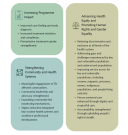
Expected results for stigma investments in GC8